A Chorus of Opinions

Back sometime in the mid 1990’s, I was playing keyboards in a band. One gig in Walker, Newcastle was memorable for a number of reasons. It was an inauspicious start – in my experience a pub with a flat roof is never a good sign. On arrival, we encountered kids on the roof throwing bricks into the car park and asking if we would like them to “look after” the cars for us, in exchange for a tenner.

Once we were inside and began playing, it became clear that the crowd weren’t really here for us. We finished most songs to silence. About half way through the first set, at the end of a song, from somewhere near the bar, a woman shouted: “I wish you would shut the f*** up – I’ve got a bad heed!”

Which, in its own way, is about as direct a piece of audience feedback as you can get.

As an artist or musician, if you make anything and put it out into the world, sooner or later you’re going to be on the receiving end of criticism.

It can come from all directions. Parents, teachers, audiences, friends, reviewers, algorithms, curators, the odd person in a pub. Some of it is thoughtful and useful. Some of it is careless. Some of it says more about the person giving it than the work itself.

The tricky part is that we’re wired to notice it.

Praise tends to wash over us. Criticism sticks. It lands. It echoes. We give it more weight than it probably deserves. I can remember kind, encouraging feedback from music teachers over the years – but if I’m honest, it’s the offhand, slightly cutting remarks that still have a bit of sting to them years later. A single comment, delivered badly, can sit with someone for years.

When I release new music, I sometimes use a platform called Submithub. It’s a service that connects artists with playlist curators, bloggers and reviewers. You send your track, they listen, and they either accept it for their playlist or decline it – often with a short bit of feedback explaining why.

It’s actually quite a useful window into how different people hear the same piece of music.

Recently I released a new single ‘In The Space Between’ You can listen to it here https://too.fm/pw02-inthespacebetween

Below, are a few snippets of feedback from curators who rejected the track and decided NOT to include it in their Spotify playlists:

“A masterful piano performance… I would have liked the overall song to surprise me more.”

“Very heartfelt melody… but a bit too melancholic.”

“Superb track… but I’m looking for something with a sadder, more melancholic mood.”

“A beautiful piece… but a bit too sweet and lovely for my playlist.”

“I couldn’t really connect with the stronger notes in the low register — I prefer softer tones.”

“Great piece… but a bit too close to the waltz genre, which I don’t support.”

“Really beautiful and delicate… but slightly more ‘spaced out’ than what we’re looking for.”

If you read those back-to-back, firstly, its very mild criticism – largely positive and mostly just that the piece doesn’t fit their playlist. Previous pieces have had more brutal feedback. I also find that it’s quite hard to know exactly what to take from them.

Too melancholic. Not melancholic enough. Too sweet. Not surprising enough. Too strong. Too soft. Too waltzy. Not quite the right kind of “space”.

Same piece. Different ears. Different tastes. Different contexts.

And that’s really the point.

Criticism isn’t objective truth. It’s a snapshot of one person’s taste, in one moment, shaped by what they’re looking for, what they’ve heard before, and what mood they happen to be in.

That doesn’t mean these opinions are useless. Sometimes there are patterns worth noticing. Sometimes a comment can genuinely help you hear your work differently.

But it does mean you have to keep it in proportion.

Because if you give every piece of criticism equal weight, you end up paralysed and trying to please everyone, which leads to a dilution of originality and a movement towards the generic rather than the individual. And is also, by the way, not possible.

At some point, you have to decide what you are trying to do, and measure everything else against that.

For me, that’s been a gradual learning process. I definitely used to take things more to heart. These days, I try to let it pass through a bit more lightly.

Listen. Consider. Take what’s useful. Leave the rest. And keep going.

Criticism isn’t a sign that something’s gone wrong – it’s a sign that the music is out there, doing what it’s supposed to do.

Being heard. Being felt. Being reacted to.

Even, occasionally, by someone in a flat-roof pub with a bad heed.

Have a great week.

Steve

Inside the Composer Circle – Four composers, four sets of pieces, and an afternoon exploring new piano music at the Newcastle Piano Festival.

Almost three weeks ago, Annie BallCatherine Hearne and I spent two full days listening to new music.

Fifteen composers had submitted work to be part of this year’s Composer Circle at the Newcastle Piano Festival, and our job was to read, listen, reflect, and decide who would join the line-up. I was delighted to have been asked by festival director Annie to curate a concert for this years event.

It’s always a strange and slightly humbling experience being on both sides of this process. Sometimes you’re the person sending work out into the world and hoping it resonates. Other times you’re the one entrusted with making the decision.

What I can honestly say is that we loved discovering every submission. Each one had its own voice and perspective.

But when it came to the final conversation, the panel was almost unanimous.

This year’s Composer Circle brings together three very distinctive voices alongside my own work – composers who each approach the piano in completely different ways.

Four composers. Four perspectives.

Ieva Dubova (performing as Aura Mae) explores how the living DNA of chant can be reimagined in contemporary instrumental music. Her work blends intimate piano textures with subtle electronics and immersive harmonic worlds, creating something quietly experimental but emotionally direct.

Charles Mauleverer is an internationally performed composer whose music has been played by major orchestras across Europe. Although his work often operates on a large scale, there’s a philosophical curiosity at its core – and it’s exciting to have someone with that kind of scope rooted here in the North East.

Calum Howard, based in Newcastle, brings yet another perspective. His synaesthesia means music appears to him as colours, patterns and textures, and his instinctive, ear-led approach draws on minimalism, jazz improvisation and electronic sound worlds.

And I’ll be sharing my own work as part of the circle too – continuing something I care deeply about: creating different spaces where composers can present their music in a direct, personal way.

A different kind of concert

The format is intentionally simple.

Each composer introduces a piece of their music, performs it, and then hands over to the next person in the circle. Over the course of the afternoon the spotlight moves gently from one voice to another and back again.

There’s something very special about hearing music this way. When composers speak about their work before playing it, the music opens up differently. It becomes less abstract and more human.

It’s not about academic explanation.
It’s about connection.

A small but important reflection

One thing that did stand out during the selection process: of the fifteen submissions, only two were from women composers.

That tells its own story. There’s clearly more work to do in encouraging women to put themselves forward, and it’s something we’re committed to improving in future festivals.

An invitation

If you’re curious about contemporary music.
If you want to hear living composers talk about their work.
If you believe the North East deserves bold artistic voices and new ideas.

This event is for you.

The Great Northern Piano Session – Composer Circle takes place on Sunday 22 March at 2:30pm as part of the Newcastle Piano Festival at Jesmond United Reformed Church.

Tickets and full festival details are here:
https://www.eventbrite.com/cc/the-newcastle-piano-festival-2349389

If you’ve ever wondered what new piano music sounds like when it’s shared directly by the people who write it, I’d love you to come along and experience it.

Steve

NE Volume Interview February 2026

Thanks to Ellie Byrne from https://nevolume.co.uk/ for her time speaking to me about my recent album release ‘Homecoming’

NE Volume Magazine // Interview

Newcastle’s Steve Luck unleashes new album.

“There’s a strong sense of identity up here”.

Steve Luck, a pianist and composer based in Newcastle, is known for his intimate, felted‑piano sound and quietly expressive modern classical pieces. His music has been streamed more than four million times and is regularly used on TV and radio.

Ellie Byrne caught up with him to discuss his new album.

‘Homecoming’ is an evocative title. What is the core personal meaning of ‘coming back to where you belong’ for you?

For me, this is tied up with the Northeast as a whole. There’s a strong sense of identity up here – a feeling of belonging and recognition that seems more pronounced than in other parts of the country. It’s the mix of things: the people, the shared history, the football, the Tyne Bridge, the pull of the Northumberland coast. All of it creates an atmosphere of familiarity, ease, and warmth.

A lot of my music is inspired by local places and stories, so Homecoming was about tapping into that wider regional pull. It’s the feeling of settling back into the landscape and the community that shaped you – a quiet acknowledgement that, for all the travelling and busyness, this is the place that still feels most like home.

The album is described as ‘music for slowing down’. Why do you feel this theme is so important for listeners today?

It’s not a Covid album exactly, but that enforced halt five years ago definitely shifted something. Everything stopped, and it made a lot of us look at life differently. For me, it nudged my writing into a more reflective place. And I suppose getting older plays into it too – you start paying attention to the small details and appreciating the quieter moments. That sense of stillness and clearer thinking became a big part of the music.

You recorded on a felted upright piano. Why was that specific, intimate tone essential for this album?

I’ve always been drawn to the soft, intimate sound of my felted upright – it’s a Yamaha in my studio – and that tone really shapes the way I play and write. Every little nuance comes through, encouraging a quieter, more thoughtful approach. There’s been a trend over the last decade, with people like Nils Frahm popularising felted or muted pianos, and I love how the instrument itself seems to invite space and stillness into the music.

With over four million streams, your music clearly resonates. What do you think makes modern solo piano connect so strongly with listeners?

I think it’s simple, direct, and leaves space for the listener to bring their own thoughts and feelings. The instrument is versatile – it can be bold and powerful, soft and intimate, classical or experimental – mirroring our own range of emotions. That openness allows listeners to connect with the music in their own way.

‘Homecoming’ is your fourth solo piano album. How did the experience of the previous three inform your goals and approach for this release?

I see Homecoming as a development rather than a departure. Over the years, I’ve honed my process – writing, recording, mixing – and the pieces themselves have become leaner and more direct, getting to the heart of what I want to say more quickly. The album has more clarity and cohesion than my earlier releases.

What is one feeling or perspective you hope every listener gains from hearing ‘Homecoming’?

A sense of ease. If someone finishes the album feeling a bit calmer, more grounded, or more connected to themselves or the world around them, that would be lovely.

You can listen to Steve Luck’s new release now at steveluck.substack.com.


Hello and a (slightly belated) Happy New Year 💫

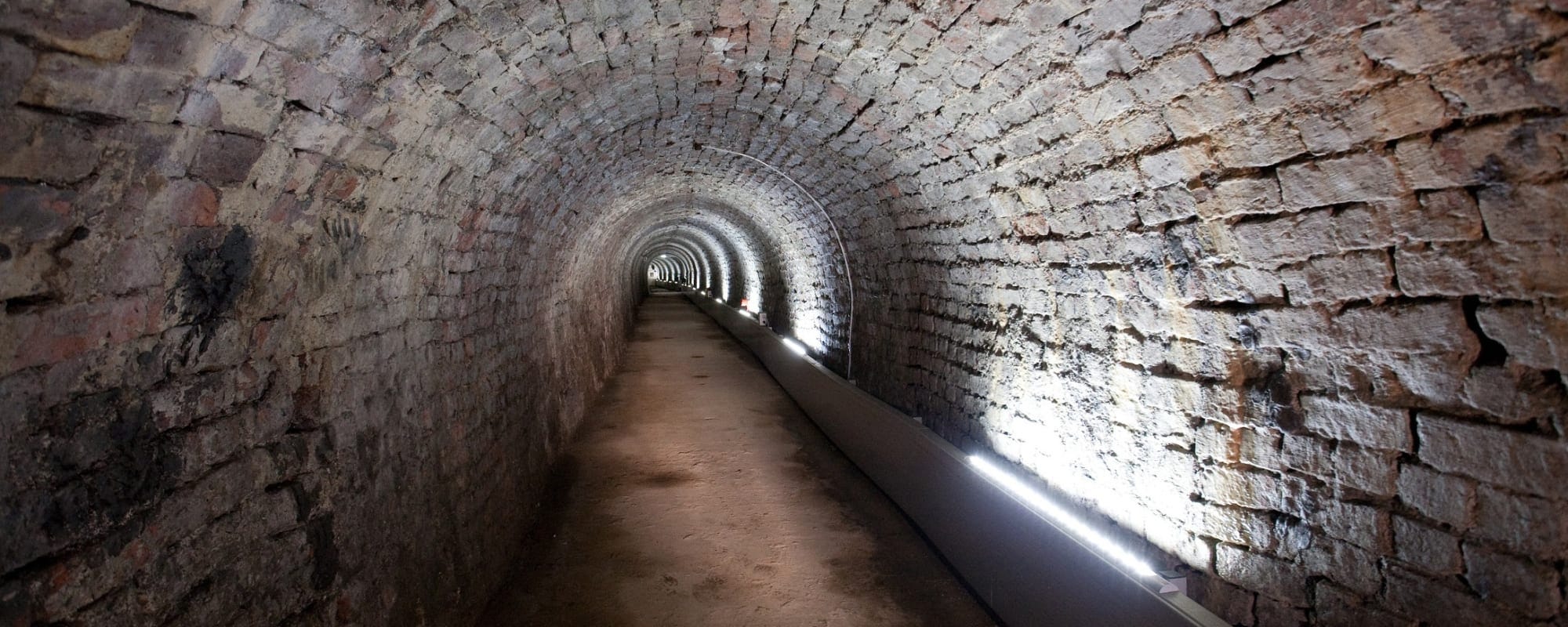
I hope 2026 has started gently for you. Thanks to all of you who came to the Victoria Tunnel concert on 20th December – you all made it such a lovely occasion and a great way to begin the holidays.

I’ve only recently got back into work after a miserable end to December. A flare-up of back pain was followed pretty swiftly by flu and a lingering cough, which curbed a fair few of the planned festivities and obviously, with me being a man, it felt loads worse 😜

The upside was that it forced a proper pause, and that was followed by a really restorative week up in Kielder, in one of the quietest corners of Northumberland. Short walks by the reservoir, very good food, and regular dips in the hot tub did the trick.

Things are definitely on the up now, and it feels good to be back in the studio with some genuinely exciting plans for the year ahead.

Newcastle Piano Festival – Call for Composers
First up, I wanted to share something I’m really looking forward to being part of in 2026. I’m curating a daytime concert for the Newcastle Piano Festival and we’ve just put out the open call:

CALL FOR COMPOSERS – Newcastle Piano Festival 2026

We’re inviting contemporary composers working with piano-based music to apply to perform at The Great Northern Piano Session – Composer Circle, a relaxed daytime concert as part of the festival.

📅 Sunday 22 March 2026, 2.30pm
📍 United Reformed Church, Jesmond

The concert brings together four composers (including me), each performing their own original work. It’s a one-piece-at-a-time format, with short introductions and a post-concert Q&A. The aim is to create a warm, unhurried listening experience, both for the audience and the performers.

🎹 What’s on offer

Paid performance fee (MU Casual Stage Rate £189.55 – made possible with support form the Musicians Union)

Festival platform and an engaged listening audience

We’re especially keen to hear from emerging and under-represented composers based in the North of England.

🗓 Deadline for applications: Friday 13 February 2026, 5pm
📩 Apply here: https://forms.gle/Z2dX2LjzrHfEJcCS6

If you know someone who might be a good fit, I’d really appreciate you passing this on. And if anyone has questions about it, I’m very happy to chat.

New music coming at the end of March
I’ll also be releasing a new track towards the end of March as part of Piano Whispers 02, a compilation curated by ad21 music. It’ll be out on Piano Day 2026, and the brief very much suits my style: calm, intimate piano, likely on the felted upright, around the 2–4 minute mark.

The release will be supported with playlists, blog and radio promo, and some nice visual bits too. I’ll share more about the piece itself once it’s finished, but for now it feels good to have a clear musical deadline to aim for.

Out of curiosity, I’d love to know:
Do you tend to listen to full piano albums, or individual tracks and playlists?
Feel free to hit reply or leave a comment.

Adult Piano Club – new idea
Teaching term has started up again, and I’m trialling a new idea I’ve been thinking about for a while: an Adult Piano Club.

The idea is a once-a-month, relaxed session where adult learners can come along, play something if they want to, and get a bit of experience performing in a supportive, non-judgemental environment. Listening is just as welcome as playing.

The plan is:

About 1 hour long

Coffee, tea and biscuits provided

Very informal and friendly

A small cost per session to cover my time and to keep us in biscuits

If this sounds like something you’d enjoy, I’ve put together a short form where you can register interest and let me know which days or times would suit you best:
https://forms.gle/x8RzeyPTZbg8FCfP6

This is very much about shaping something useful and enjoyable, so any thoughts or suggestions are genuinely welcome.

I’ll be in touch again soon with news about upcoming concerts, and an exciting collaboration with another North East–based artist.

Thanks, as always, for reading and for being here and have a lovely week.

Steve

PS Chat GPT recently produced an image as part of a round-up of my working life in 2025. I didn’t ask for it, but it turned out to be a surprisingly spot-on summary of the year.(Don’t try to play the piano in the picture – it looks like its only got four keys per octave!)

New Album: Homecoming

I’m excited to share that my new album, Homecoming, is out today. This collection of intimate piano pieces has been a long time in the making, and I’m really proud to finally let it out into the world.

You can listen and support it on Bandcamp, where CDs and a printed sheet music book are also available:
https://steveluck.bandcamp.com/album/homecoming

It’s also streaming on Spotify and Apple Music https://steveluck.ffm.to/homecoming

The lead single, Waltz in F Minor, has already had some lovely early responses:

  • “This is a lovely waltz” — Christina
  • “Beautiful and really elegant piece” — Richard Laurence
  • “Great theme, very engaging” — mnomusic

I hope the album finds a quiet corner in your day and that you enjoy the little moments each piece holds.

Aurelia 🌟

(and a Tunnel gig in September)

Well, the naming competition for my latest piano piece has now finished – and I’m very happy to say that the winning title is Aurelia, suggested by Lisa Jones.

Lisa said she chose the name because “the music sounds like it carries radiance and light and warmth throughout” – and that just felt perfect. When I listened again with that in mind, it really chimed with me. I also looked up the meaning of the word afterwards and loved what I found: Aurelia means “golden” or “the golden one,” from the Latin aureus, associated with preciousness, radiance, and the golden glow of the sun. A lovely fit.

The single will be released on all digital platforms at the end of this month, and Colin Hagan is already working on the artwork – I’ll share a glimpse of that soon.

I was blown away by the words people sent in about how the music made them feel. Here are just a few of the highlights:

  • “It evokes thoughts of time spent with your family and loved ones, and how lucky we are for what we have.”
  • “Listening naturally brought up memories…no subject, no reason, no place and no time, but the heart remembered – the emotions and the longing.”
  • “It makes me think of that beautiful feeling you get on a train where whole landscapes are passing by – that mix of melancholy, peace and wonder.”
  • “As I listened for the first time, the sun was slipping below the horizon – that soft, golden moment when day exhales into night… quiet reflection, gentle longing, and a kind of light that only exists for a few fleeting minutes before the stars come.”

Reading these was really moving – it’s always fascinating to hear what people hear and feel in the music.

Have a listen again and see if you can hear a connection between the music and the new title!

And while I’m here with news – I’ll also mention that my next Victoria Tunnel concert is coming up on Friday 19th September at 7.30pm as part of the Sounds of the Underground series. I will be giving a live debut to Aurelia at that show. Tickets are on sale here: https://www.ticketsource.co.uk/steve-luck-music/atmospherica-concert-series-steve-luck-live-solo-piano-concert-in-the-victoria-tunnel/e-gyvgqg

It’ll be lovely to be back playing in that special space again.

More soon but for now, thanks again to everyone who joined in with the naming process. Aurelia feels just right. 🌟

Steve

Piano Desert Island Discs Part 2

Here’s part two of my piano desert island discs – five more pieces that have inspired me, stuck with me, or made me want to practise a lot more. A mix again of styles, approaches and eras, but all united by the same thing – they moved me in some way.

(adobe express please insert groovy AI image of piano on desert island – take a look at the seat…is it even a seat? looks a little challenging to balance on on the sand – especially for someone of my build!)

1. Hania Rani – Live from Studio S2

An amazing solo performance that combines acoustic piano with subtle electronics in a really beautiful way. It’s affecting and impressive in equal measure – the kind of performance that pulls you in and doesn’t let go. There’s technical virtuosity here, yes, but it always serves the music. One of the best examples of how modern piano can expand in all directions while still feeling deeply human.
🎧 Watch here

2. Brad Mehldau – Blackbird

This live version, filmed at the Steinway showroom in Hamburg, is a total gem. There’s such economy and clarity in his playing, but also so much feeling. He builds the whole thing around a repeated G note, with everything else moving around it – like the world shifting while one thread stays steady. I was blown away by the structure of this performance – it develops so naturally, the increasing complexity drawing you in until you realise it’s taken you somewhere completely new. A quiet masterclass.
🎧 Watch here

3. Ludovico Einaudi – I Giorni

This piece has become really popular with piano students in the last decade or so. There’s a version filmed at Steinway Hall in New York that’s well worth a watch. Einaudi himself said: “I was among the first of a new generation to create and to write music that was, let’s say, playable and contemporary… I think the music that I started to create was, in a way, filling the space left open and abandoned by composers.”
He was classically trained, studied with Luciano Berio, and had all the tools for a big career in the classical world – but instead chose to carve out his own musical path. He gets criticised for the simplicity of his music, but I’ve said it before – simplicity is not a weakness. The communication is direct and honest, and there’s a beautiful blend of melancholy and hope in this piece that I find really moving.
🎧 Watch here

4. Dr. John (Mac Rebennack) – Mac’s Boogie

This was on heavy rotation on cassette when I was a student in the late ’80s. Technically, I was supposed to be studying classical music – in reality I spent most of those three years trying to play blues and boogie woogie in C major, and this was exactly the kind of thing I wanted to emulate. It’s got everything – driving rhythm, complex runs, turnarounds, and that wild energy that makes boogie piano such a joy to listen to and play. Built on a simple 12-bar blues form, but packed with invention and flair.
🎧 Watch here

5. Ben Crosland – Oceans Apart

Ben’s a fellow pianist, teacher and composer based in Worcestershire. Some of you might remember we were due to play together in Newcastle in 2020 – a concert also featuring Canadian pianist Nathan Shubert – but it had to be moved online because of the lockdowns.
Oceans Apart was the track that really brought Ben to wider attention – it ended up on Spotify’s Peaceful Piano playlist and has now had more than 83 million streams. And deservedly so. His work across the board – composing, performing, recording, producing – is consistently excellent. This track is just one of many examples. Beautiful, understated, and full of feeling.
🎧 Watch here


That’s part two. Hope you find something new to love here – or rediscover something you’d forgotten.

Thanks for reading. Have a lovely day.

Steve

PS: My next live performance is inside the incredible Victoria Tunnel in Newcastle on Friday 19th September 2025 at 7.30pm. A solo piano concert in one of the most atmospheric venues around.
🎟️ Tickets available here

Piano Desert Island Discs Part 1

There are certain pieces of piano music that have inspired me, shaped the way I play, or just made me feel something deep and lasting. I thought it might be nice to share some of them here, like my own version of Desert Island Discs but focused purely on piano. It’s a bit of a mixed bag – classical, jazz, filmic, soulful – but that’s the point. These are the ones I’d take with me if I had to disappear to a quiet island.

Here are the first five…

1. Yuja Wang – Flight of the Bumblebee

A masterclass in control. Playing fast is one thing, but playing fast and quietly? That’s where the real challenge lies. This encore performance by Yuja Wang is a total joy – dazzling, playful, and technically outrageous in all the best ways. The quietness of the crossed hands sections and the contrary motion scale passage near the end as well as the delicate nature of the ending are particularly impressive.
🎧 Watch it here

2. Nina Simone – Backlash Blues

I saw Nina Simone perform this live at the Oxford Playhouse back in 1990 when I was a music student. It was soulful, emotional, and deeply powerful – a performance that’s never left me. She had this way of turning pain into beauty, protest into poetry.
When she died, she left behind a fearless legacy. Classically trained, but uncontainable, she wove blues, gospel, jazz, and politics into every performance. Backlash Blues was her setting of a Langston Hughes poem. Released in 1967 during the height of civil rights protests, it’s part piano lament, part call to action.
As folk singer Rhiannon Giddens once put it: “Nina Simone was more rock & roll than a bunch of people who have already been inducted into the Rock and Roll Hall of Fame.”
🎧 Listen here

3. Ólafur Arnalds – Particles

Taken from Island Songs, this track gets me every time. Everything about it – the composition, the arrangement, the vocal performance by Nanna Bryndís Hilmarsdóttir, and the video is really cool. It’s one of those pieces where you don’t want to change a single note. It’s fragile, beautiful, cinematic, and I find it incredibly moving. Its the perfect companion if you are having a tough time.
🎧 Watch here

4. George Winston – Joy

This is from his December album, which I listened to constantly in the late ’80s. At the time, it felt like something completely new. It was released on the Windham Hill record label and originally was part of what became known as “new age” music – a term which feels a little out of date now. Windham Hill produced music that was difficult to define, with elements of classical, folk, and jazz, nearly all of it instrumental, acoustic, and mellow. The album is an intriguing blend of classical textures with more modern, pop-influenced harmonies. It felt fresh, accessible, and unpretentious – the opposite of the high-art classical music snobbery I’d always rebelled against.
When I got married, this was the piece that Tracey walked down the aisle to.
🎧 Listen here

5. Oscar Peterson – Ballad to the East

Oscar Peterson was one of the greatest ever technicians on the piano. Everything he played had this irresistible swing – even the slow stuff. I was amazed by his virtuosity and wanted to play music like that from the moment I first heard him.
My teacher at the time, the brilliant Janet Nicolls (who did a huge amount to raise the standard of piano teaching in the North East through her work with EPTA), pointed me to his Canadiana SuiteBallad to the East really stuck. It’s full of beautiful harmonies making use of plenty of “expensive chords” and expressive rubato – perfect for stretching your phrasing muscles. I ended up playing it as a solo piano piece by way of an introduction to the 2nd set with one of my first bands in the early ’90s – we were called Mr Lucky.
🎧 Watch here


That’s it for part one. I’ll be back soon with five more piano tracks that have stuck with me over the years – including a few lesser-known gems and some modern favourites. Hope it’s sparked some memories or discoveries of your own. Please please do reply or comment below with your favourite pieces of piano music – I would love to get your suggestions.

Enjoy the summer.

Steve

Making It Up as You Go

Inside the process of musical improvisation, and a night you won’t want to miss

Improvising has always been one of the most fascinating and mysterious parts of playing the piano for me. That feeling of sitting down with no plan, no sheet music, and seeing where the sound takes you… it’s part risk, part trust, and part curiosity.

In the past I’ve spent a lot of time exploring that world – not just in purely musical settings, but also as part of improv comedy groups in and around Newcastle like The Suggestibles and On the Spot. With The Suggestibles, the second half of the show was often a completely improvised musical, made up on the night with songs, characters, and storylines being created in real time. It taught me a lot about listening, staying open, and the golden rule of improv: say “yes, and…”. It’s all about building, not blocking – following ideas, not shutting them down too early.

And while music and comedy are different, the spirit is the same: stay present, trust your instincts, and enjoy the surprises.

Improvising at the piano isn’t just randomly pressing keys and hoping something nice happens – although actually when I think about it that is quite a good start. At its best, it’s about listening deeply to what’s already in the air. It’s about responding, shaping, leaving space, and trusting instincts. And maybe just allowing yourself to follow a thread without knowing exactly where it’s heading.

Sometimes it starts with a single note. Or a small pattern or a rhythm or a fragment of melody. You play something, and you listen to what it suggests. Then you play the next thing in response to that. And again. And again. If you’re lucky, the piece starts to reveal itself as you go.

The trick (if there is one) is to try stay in the moment, without trying to plan too far ahead. Too much thinking – especially making early judgements about the quality of what you have played can really get in the way. It’s more about feel and flow. It’s a bit like a conversation: you don’t usually script what you’re going to say in advance – you just talk, and trust that the words will come.

Improvisation’s been at the heart of music-making for centuries. Bach did it. Mozart did it. Keith Jarrett definitely did it. If you haven’t heard it before you should definitely check out his Köln Concert – is a live solo double album recorded at the Opera House in Köln, in 1975 and released later that year. It is the best-selling solo album in jazz history and the best-selling piano album of all time. In 2025, the album was deemed “culturally, historically, or aesthetically significant” by the Library of Congress.

It’s a masterclass in following the moment and proof that sometimes, making it up as you go can lead to something timeless.


One of the very best…

Which brings me to Paul Taylor – a master improviser if ever there was one.

Paul’s one of those rare musicians who can sit at a piano and make something totally fresh, utterly compelling, and completely in the moment. He combines a deep understanding of the instrument with a wildly inventive musical imagination. His playing can be tender, raw, humorous, unpredictable – sometimes all within the same piece. And no two performances are ever quite the same.

He’ll be bringing his one-of-a-kind approach to a special studio concert on Friday 4th July at 7.30pm, right here at 36 Lime Street in Newcastle. If you’ve never heard Paul play live before, you’re in for a real treat. And if you have you’ll know why I’m so excited he’s doing this.

Space is very limited for this one – it’s an intimate setting, just a few rows of chairs and a piano (or two). If you’re curious, I’d definitely recommend booking early – especially as there are early bird discounted tickets still available for now.

🎟 Tickets are on sale at: https://www.ticketsource.co.uk/steve-luck-music/atmospherica-concerts-presents-paul-taylor-and-steve-luck/e-qddeez

Come along. Who knows what will happen? That’s the magic of it.

Thanks for reading.

Steve

Just Back from Zakynthos

Just back from a bit of time out in Zakynthos – much-needed sun, some swims, and a proper chance to stop for a while. I took Mood Machine with me – a book by Liz Pelly that digs into Spotify and how it’s reshaping the music industry. Its by far the biggest digital music platform in the world. It wasn’t the most relaxing holiday read, but it was definitely thought-provoking.

The gist of it is that Spotify pushes a certain kind of listening – mood playlists, algorithm-led recommendations, background music that’s designed not to stand out too much. They call it ‘lean back’ listening, and they actually promote this kind of passive, background playlist listening as a lifestyle choice – calm music for studying, ambient sounds for working, chilled beats for cooking dinner. It’s not about discovering artists so much as curating a vibe. The book makes the point that this approach side-lines musicians in favour of moods – the music becomes functional rather than personal, and the people behind it are often invisible. Instead of encouraging deeper engagement with albums or artistry, it all gets flattened into a stream of anonymous, interchangeable tracks that support the user’s activity, not the artist’s expression. It’s efficient, but it’s not exactly nourishing.

It’s made me think more carefully about how and where I share my music. Like a lot of artists, I’ve had moments of chasing the idea that something might land on a big playlist and suddenly take off – but the odds are slim, and even when it does happen, the impact is often short-lived. One of the biggest frustrations is that if a track does get picked up, it might reach a lot of ears, but I’ve got no way of knowing who those listeners are, or how to keep in touch with them. Spotify holds all of that data – so every time I release something new, I’m basically starting from scratch again. It’s a constant cycle of pushing things out into the void and hoping they stick. And it’s made me realise how much more I value the spaces where I can actually connect with people directly – like here.

What’s becoming clearer is how important real, personal connection is – far more than trying to game the system for a few extra streams. That’s why this newsletter matters to me. If you’re reading this, you’re part of something that feels a bit more direct and honest, and I really appreciate your support.

I’ll post a few holiday photos below (look out for the blank musical score inviting a composition written across the sky), but before I go just a quick heads-up on a couple of upcoming things too:

🎹 Thursday 20th June – back underground and in the dark in the Victoria Tunnel for a solo show. It’s a unique place to play – quiet, atmospheric, and always a bit special.

🎹 Thursday 4th July – hosting Paul Taylor at my studio at 36 Lime Street. Paul’s an amazing improvising pianist whose work is full of subtlety and surprises – I’m really looking forward to hearing what unfolds (more details about him coming soon)

Tickets for both of those shows are on sale now at https://www.ticketsource.co.uk/steve-luck-music

More soon – and thanks again for sticking with me.

Steve

Malcare WordPress Security